
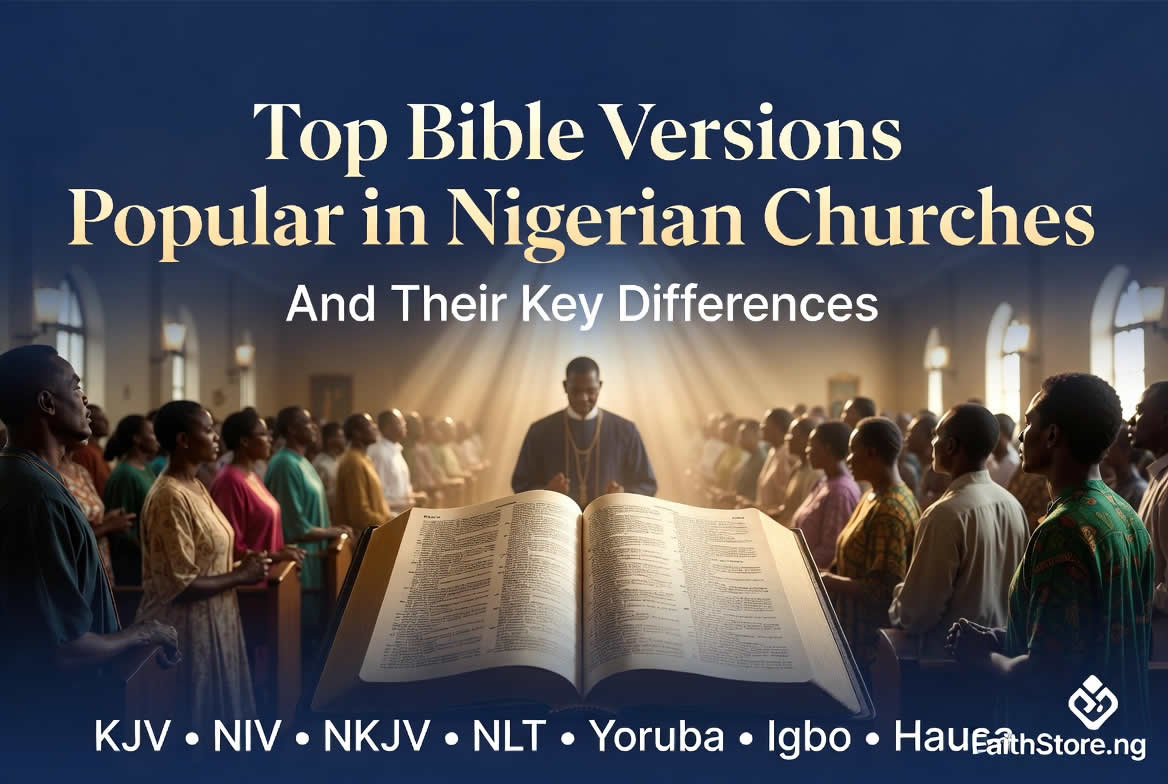
The Bible is the foundation of faith in every Nigerian church — from small house fellowships to mega churches in Lagos, Abuja, and Port Harcourt. However, with so many translations available, many pastors and members often ask: Which Bible version is best?
Here’s a practical guide to the most popular Bible versions used across Nigerian churches and their key differences.
1. King James Version (KJV) – The Classic Standard
The KJV remains highly respected and widely used in many Nigerian churches, especially in older, traditional, and Pentecostal congregations.
- Strengths: Majestic, poetic language; excellent for memorization and public reading.
- Weaknesses: 17th-century English can be difficult for younger members and new believers to understand.
- Best For: Deep study, preaching in traditional settings, and those who love the “thee” and “thou” style.
2. New King James Version (NKJV) – The Best of Both Worlds
A modern update of the KJV that keeps the dignity and beauty while improving readability.
- Strengths: Retains the poetic flow of the KJV but uses clearer modern English.
- Best For: Churches that love traditional sound but want better understanding. Very popular in many Nigerian mainline and evangelical churches.
3. New International Version (NIV) – The Most Readable & Balanced
The NIV is currently one of the most widely used translations in Nigerian churches, especially among youth and urban congregations.
- Strengths: Clear, natural English that maintains good accuracy. Excellent balance between literal and dynamic translation.
- Best For: Everyday reading, discipleship, youth ministries, and new believers.
4. New Living Translation (NLT) – The Easiest to Understand
The NLT uses very simple, contemporary language that feels like a conversation.
- Strengths: Extremely readable — ideal for children, youth, and those learning English.
- Best For: Family devotion, outreach programs, and explanatory preaching.
5. Indigenous Language Bibles – Connecting Hearts in Mother Tongues
- Yoruba Bible (Bíbélì Mímọ́)
- Igbo Bible (Bible Nsọ)
- Hausa Bible (Littafi Mai Tsarki)
These translations are incredibly powerful in Nigeria. Many churches use them alongside English versions during services so everyone — young and old — can understand God’s Word in their heart language.
Pro Tip: Many growing churches now use parallel Bibles (English + Local Language) or the YouVersion Bible App for easy switching between versions.
Quick Comparison Table
| Bible Version | Reading Level | Style | Best Use in Nigeria |
|---|---|---|---|
| KJV | 12th Grade | Formal & Poetic | Traditional churches, memorization |
| NKJV | 9th Grade | Formal but clearer | Balanced churches |
| NIV | 7th–8th Grade | Balanced | Most popular in urban & youth churches |
| NLT | 6th Grade | Very Conversational | New believers, children & outreach |
| Yoruba/Igbo/Hausa | Varies | Heart Language | Rural & indigenous congregations |
Recommendation for Nigerian Churches
The wisest approach is not choosing one — but using multiple versions:
- Use NIV or NKJV as your main pulpit Bible.
- Encourage personal reading in NLT or local language Bibles.
- Invest in quality physical Bibles for members.
A good Bible is not just a book — it is a treasured tool for spiritual growth.



 No products in the cart.