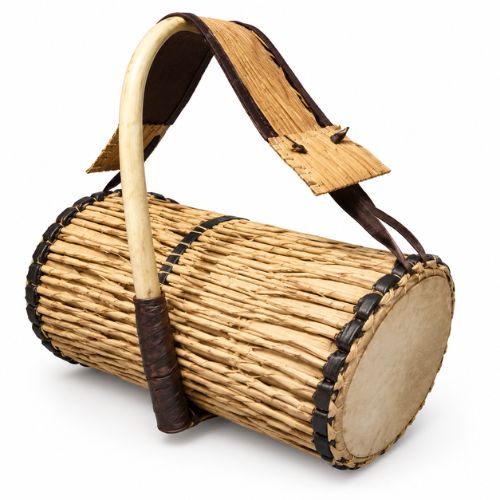
Talking Drum (Gangan)
African music is celebrated for its vibrant rhythms, expressive sounds, and deep cultural significance. Among its traditional instruments, the Talking Drum holds a special place because it can produce changing pitches that resemble the tones and rhythms of spoken language.
The Talking Drum (Gangan) is particularly associated with the Yoruba people of southwestern Nigeria. Traditionally, skilled drummers use it to communicate messages, accompany praise singing, celebrate important occasions, and support storytelling through music.
Unlike a conventional drum that primarily produces a fixed range of tones, the Talking Drum allows the player to change its pitch by squeezing the tension cords while striking the drumhead. Consequently, an experienced drummer can produce expressive sounds that make the instrument especially distinctive.
Today, the Gangan remains relevant in traditional performances and contemporary music. Furthermore, it provides an excellent way for younger generations to connect with Nigerian cultural heritage while exploring the creative possibilities of percussion.
Key Features of the Talking Drum (Gangan)
1. Traditional Yoruba Percussion Instrument
The Gangan is an important instrument in Yoruba musical traditions. It is commonly used during cultural celebrations, traditional ceremonies, and performances that showcase indigenous Nigerian music.
2. Adjustable Pitch and Expressive Sound
One of the instrument’s most remarkable characteristics is its ability to produce different pitches. By applying pressure to its tension cords while striking the drum, the player can create changing tones and expressive rhythms.
3. Suitable for Cultural Performances
The Talking Drum is a valuable addition to traditional music ensembles, cultural exhibitions, festivals, and stage performances. Moreover, it can complement dance performances and traditional praise singing.
4. Versatile Musical Applications
Although the Gangan has deep traditional roots, musicians can also incorporate it into contemporary African music, fusion performances, and selected worship arrangements.
5. Supports Cultural Learning
For music students and cultural enthusiasts, learning to play the Talking Drum provides an opportunity to explore traditional percussion techniques and understand the relationship between rhythm, language, and cultural expression.
Benefits of the Talking Drum (Gangan)
Preserves Nigerian cultural heritage
The Talking Drum helps preserve and promote traditional Yoruba music. By learning and playing the instrument, musicians can contribute to keeping indigenous musical practices alive for future generations.
Adds expressive rhythms to performances
Because the instrument can produce changing pitches, it offers more expressive possibilities than many conventional percussion instruments. As a result, performers can create distinctive musical patterns and engaging rhythmic conversations.
Enhances cultural celebrations
From traditional weddings to festivals and community events, the Gangan can help create an authentic cultural atmosphere. Additionally, its distinctive sound makes it a memorable part of many traditional performances.
Encourages musical creativity
Musicians can experiment with different rhythms, tonal patterns, and combinations of instruments. Therefore, the Talking Drum can support both traditional music and innovative contemporary compositions.
Useful for music education
Music teachers and cultural instructors can introduce the Gangan to students who want to understand African percussion. In this way, learners can explore rhythm, coordination, listening skills, and cultural history.
Where Can You Use a Talking Drum?
The Talking Drum (Gangan) can be used in several musical and cultural settings, including:
- Traditional ceremonies: Accompany cultural celebrations and important occasions.
- Weddings and parties: Add traditional Nigerian rhythms to celebrations.
- Cultural festivals: Support performances showcasing Yoruba heritage.
- Live music performances: Complement traditional and contemporary African music.
- Schools and music centres: Introduce students to indigenous percussion instruments.
- Church events: Complement African-themed worship, cultural celebrations, and special musical performances where appropriate.
- Dance performances: Provide rhythmic accompaniment for traditional dancers.
- Music recording: Add distinctive African percussion sounds to recorded compositions.
Product Specifications
| Feature | Details |
|---|---|
| Product Name | Talking Drum (Gangan) |
| Instrument Type | Traditional percussion instrument |
| Cultural Origin | Yoruba musical tradition, Nigeria |
| Playing Method | Struck while squeezing the tension cords to change pitch |
| Primary Use | Traditional music and cultural performances |
| Other Applications | Contemporary music, music education, and selected worship performances |
| Material | Confirm with the product listing |
| Size | Confirm with the product listing |
| Accessories Included | Confirm with the product listing |
Please confirm the drum’s size, construction materials, finish, and included accessories before purchasing, as these details vary by model.
Why This Product Matters: Benefits & Comparison
Traditional musical instruments play an important role in preserving cultural identity while creating opportunities for musical expression. The Talking Drum (Gangan) is particularly significant because its changing pitches allow skilled performers to reproduce speech-like tonal patterns through rhythm.
Compared with conventional percussion instruments that primarily provide steady beats, the Talking Drum offers greater tonal flexibility. Consequently, it can do more than maintain rhythm: it can imitate speech patterns, accompany praise singing, and contribute to musical storytelling.
Furthermore, the Gangan offers versatility across different performance settings. While traditional drummers use it to accompany cultural ceremonies and indigenous music, contemporary musicians can combine it with modern instruments to create distinctive arrangements.
However, beginners should understand that producing clear, speech-like sounds requires practice and coordination. Therefore, anyone purchasing a Talking Drum for learning should consider its size, comfort, sound quality, and suitability for their skill level.
Ultimately, the Gangan is more than a musical instrument. It is also a representation of Nigerian cultural heritage and an expressive tool for musicians who want to explore the relationship between language and rhythm.
Tips for Choosing the Right Talking Drum
Before purchasing a Talking Drum, consider the following factors:
- Size: Choose a size that suits your age, comfort, playing style, and intended use.
- Sound quality: Where possible, listen to the drum before purchasing to assess its tone and responsiveness.
- Construction: Check the drum’s materials, tension cords, and overall build quality.
- Ease of playing: Beginners may prefer a model that feels comfortable to hold and squeeze.
- Purpose: Consider whether you need the drum for learning, cultural performances, professional music, or occasional events.
- Accessories: Confirm whether the product includes a drumstick, carrying bag, or other accessories.
By considering these factors, you can choose a Talking Drum that better suits your musical goals.
Frequently Asked Questions
1. What is a Talking Drum (Gangan)?
A Talking Drum, commonly called Gangan in Yoruba musical traditions, is a traditional West African percussion instrument that produces changing pitches when the player squeezes its tension cords and strikes the drumhead.
2. Where did the Talking Drum originate?
The Talking Drum is associated with several West African musical traditions. The Gangan is particularly associated with the Yoruba people of southwestern Nigeria.
3. Can beginners learn to play the Talking Drum?
Yes. Beginners can learn basic rhythms and playing techniques with regular practice. However, producing speech-like tones requires developing coordination and learning how to control the tension cords.
4. Can the Talking Drum be used in church?
Yes. Churches can incorporate the Talking Drum into African-themed worship, cultural celebrations, and special musical performances, depending on their worship style.
5. What should I consider before buying a Talking Drum?
Consider the drum’s size, sound quality, construction, ease of playing, intended use, and whether accessories are included.
Order a Talking Drum (Gangan) Today
Bring the richness of African musical heritage into your performances with a Talking Drum (Gangan). Whether you are learning traditional percussion, preparing for a cultural celebration, or expanding your musical collection, this distinctive instrument offers expressive rhythms and a meaningful connection to Nigerian culture.
Moreover, its versatility makes it a valuable option for traditional musicians, cultural performers, music educators, and contemporary artists.
Visit FaithStore.ng to check the availability of the Talking Drum (Gangan) and explore musical instruments for your performances, cultural events, or music department.




 No products in the cart.