

Investing can seem intimidating when you’re just starting out. Terms like stocks, bonds, mutual funds, dividends, portfolios, and compound interest often make investing feel complicated and overwhelming. However, every successful investor started exactly where you are today as a beginner.
One of the smartest ways to begin your investment journey is by learning from books. The best Investing books for beginner investors simplify complex financial concepts, teach wealth-building principles, and help readers avoid costly mistakes.
Whether your goal is financial freedom, passive income, retirement planning, or wealth creation, the right books can provide the foundation you need to become a confident investor.
Why Every New Investor Should Read Before Investing
Many beginners rush into investing without understanding how markets work. This often leads to poor decisions driven by emotions, social media trends, or misinformation.
Reading quality Investing books for beginner investors helps you:
- Understand investment fundamentals
- Reduce costly mistakes
- Build confidence
- Develop long-term strategies
- Learn risk management
- Create realistic financial goals
Investing is not about luck; it’s about knowledge and discipline.
The Difference Between Saving and Investing
Saving and investing are both important, but they serve different purposes.
Saving focuses on preserving money, while investing focuses on growing money over time.
Understanding this distinction is one of the first lessons found in many Investing books for beginner readers.
Understanding the Wealth Mindset
Before learning about investments, it is important to develop the mindset necessary for financial success.
Why Mindset Matters
Your beliefs about money influence your financial decisions.
Successful investors often:
- Think long-term
- Embrace continuous learning
- Take calculated risks
- Focus on opportunities
- Practice patience
Many investment experts agree that wealth begins with the right mindset.
Rich Dad Poor Dad: The Foundation of Financial Education
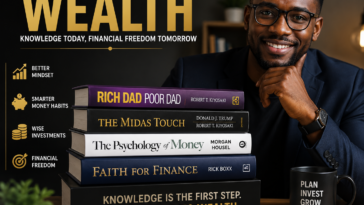
One of the most influential books for new investors is Rich Dad Poor Dad in Lagos by Robert Kiyosaki.
Why This Book Is Essential
The book introduces readers to key financial concepts such as:
- Assets versus liabilities
- Financial independence
- Passive income
- Entrepreneurship
- Wealth-building habits
Kiyosaki challenges traditional beliefs about money and encourages readers to think differently about financial success.
Among all Investing books for beginner investors, this remains one of the most recommended starting points.
Learning How Money Works
Many people work hard for money without understanding how money can work for them.
Key Financial Concepts Every Investor Should Know
Before investing, learn about:
- Compound interest
- Risk and reward
- Asset allocation
- Diversification
- Cash flow
- Market cycles
The best investment books simplify these concepts and make them easy to apply.
Understanding Cash Flow Before Investing
Many new investors focus entirely on profits without understanding cash flow.
Why Cash Flow Matters
Cash flow determines how money moves into and out of your financial life.
Positive cash flow allows you to:
- Invest consistently
- Pay down debt
- Build emergency savings
- Create financial stability
Cash Flow: A Valuable Learning Resource
Cash Flow by Robert Kiyosaki available in Lagos teaches readers how wealthy individuals think about money differently.
Lessons From Cash Flow
Readers learn:
- The importance of financial literacy
- How to identify opportunities
- Why assets generate wealth
- How passive income works
This resource helps readers understand the practical side of wealth creation and remains one of the most useful Investing books for beginner investors.
The Importance of Starting Small
One of the biggest mistakes new investors make is believing they need a large amount of money to begin investing.
Why Small Investments Matter
Successful investing is often about consistency rather than size.
Small investments benefit from:
- Compound growth
- Habit formation
- Reduced risk exposure
- Long-term accumulation
Many experienced investors started with very modest amounts and grew their wealth gradually over time.
Learning Entrepreneurship Through a Million-Dollar Weekend
Investing is not limited to stocks and mutual funds. Building businesses can also be a powerful form of investment.
A Million-Dollar Weekend offers practical guidance for individuals looking to develop entrepreneurial thinking.
What Readers Can Learn
The book teaches:
- Opportunity recognition
- Taking action quickly
- Solving real problems
- Building income-generating ideas
For readers interested in both entrepreneurship and investing, this book provides valuable insights.
It deserves a place among recommended Investing books for beginner readers because it expands thinking beyond traditional investments.
Understanding Risk in Investing
Risk is often misunderstood.
What Risk Really Means
Risk is not simply losing money. It also includes:
- Inflation reducing purchasing power
- Missing investment opportunities
- Lack of diversification
- Poor decision-making
Learning how to manage risk is one of the most important lessons found in quality investment books.
The Power of Compound Interest
Albert Einstein reportedly called compound interest one of the most powerful forces in finance.
How Compound Interest Works
When your investments generate returns, those returns begin generating additional returns.
Over time, this creates exponential growth.
For example:
- Small monthly investments
- Consistent contributions
- Long-term patience
Can produce remarkable results over several decades.
This principle appears frequently throughout Investing books for beginner investors because it is fundamental to wealth creation.
Building an Investment Plan
Every investor needs a plan.
Components of an Effective Plan
A strong investment strategy includes:
- Financial goals
- Risk tolerance
- Investment timeline
- Asset allocation
- Diversification strategy
Investing without a plan often leads to emotional decision-making.
Common Investment Mistakes Beginners Should Avoid
Learning what not to do can be just as valuable as learning what to do.
Frequent Beginner Mistakes
Avoid:
- Chasing quick profits
- Investing based on rumors
- Ignoring research
- Trying to time the market
- Investing emotionally
Many Investing books for beginner readers emphasize patience and discipline as critical factors for success.
Why Financial Education Is a Lifelong Journey
Markets evolve, industries change, and new opportunities emerge.
Continuous Learning Creates Better Investors
Benefits include:
- Improved decision-making
- Greater confidence
- Better risk management
- Increased financial literacy
Successful investors never stop learning.
This is why reading Investing books for beginner investors should become an ongoing habit rather than a one-time activity.
Developing Investor Discipline
Knowledge alone is not enough.
Habits of Successful Investors
Consistent investors often:
- Invest regularly
- Stay focused on long-term goals
- Ignore short-term market noise
- Continue learning
- Review their plans periodically
Discipline frequently matters more than market timing.
How Investing Creates Financial Freedom
Financial freedom occurs when your assets generate enough income to support your lifestyle.
Benefits of Investing
Investing can help:
- Build wealth
- Create passive income
- Fund retirement
- Achieve financial independence
- Increase financial security
Many readers discover through Investing books for beginner investors that wealth is not built overnight but through consistent actions over time.
Creating a Reading Plan for New Investors
To maximize your learning:
Step 1: Start With Foundational Books
Begin with:
- Rich Dad Poor Dad
- Cash Flow
- A Million-Dollar Weekend
Step 2: Take Notes
Record valuable principles and strategies.
Step 3: Apply What You Learn
Learning becomes valuable when it leads to action.
Step 4: Continue Expanding Your Knowledge
Read regularly to stay informed and improve your investing skills.
Additional Investment Books Worth Exploring
Once you’ve completed foundational books, consider reading:
- The Intelligent Investor
- The Psychology of Money
- Think and Grow Rich
- The Simple Path to Wealth
- One Up on Wall Street
These books complement other Investing books for beginner investors and provide deeper financial insights.
Conclusion
Investing can seem complex at first, but the right education makes all the difference. Reading quality investment books helps beginners build confidence, understand financial principles, and develop habits that support long-term success.
Books such as Rich Dad Poor Dad, Cash Flow, and A Million-Dollar Weekend provide valuable lessons on financial literacy, entrepreneurship, wealth building, and investment strategy. These powerful Investing books for beginner investors can help you avoid common mistakes and accelerate your journey toward financial freedom.
Remember, every successful investor started as a beginner. The best time to begin learning is today, and the best investment you can make is in your financial education.


 No products in the cart.